ATAF

Implementing Environmental Taxes: Norway-best practices and lessons learnt
This is the Presentation from Norway for the Webinar on Implementing Environmental Taxes Download March 2024 Norway has a long history of using excise taxes to internalise external costs. The presentationl gives a short overview of the excise taxes with an environmental basis used by Norway, with a focus on the CO2-tax and road usage tax on fuel products. The presentation also discuss current issues regarding the CO2-tax, including the relationship to emission trading and handling of biofuels. Battery electric vehicles and hybrid electric vehicles currently dominate new car sales in Norway, and in this context a project to replace the road usage tax on fuels with a national position based (GPS-based) road user charging system are discussed.

Implementing Environmental Taxes: Norway-best practices and lessons learnt Read More »
African Tax Administration Forum

Tax network Overview About The African Tax Administration Forum (ATAF) is a pan-African network providing a platform for intra-African collaboration and peer-learning between tax administrations. It aims to improve the capacity of African tax administrations, enhance the role of taxation in governance and state building, provide a voice for African tax administrations and administrators, and enhance pan-African collaboration and cooperation with development partners. ATAF’s capacity building measures also include online courses and the establishment of a Master’s programme. Currently, ATAF has 38 member countries. ATAF focuses its work on two key areas: technical assistance and research. Different activities evolve around three main objectives in those areas: Fostering efficient and effective African tax administrations, driving the knowledge hub on African tax matters as well as informing and influencing the regional and global dialogue as the African voice in the field of taxation. Many activities have been undertaken to work towards these objectives. ATAF will moreover continue its efforts to influence the global tax standards. ATAF endorses the ATI objectives of the Addis Tax Initiative and has joined the Addis Tax Initiative as ATI supporting organisation. Objectives Improve effectiveness and efficiency of tax administrations Regional and international partnership and cooperation Representation of tax administrations Activities Technical support and advisory services to Revenue Authorities Research Conferences and workshops  Executive master’s degree on Taxation Working groups Organisational Structure ATAF Secretariat Members: Executive Secretary Other officials appointed to the Executive Secretary Responsibilities Legal representative of ATAF’s strategic leadership Improve the capacity of African tax administrations Advance the role of taxation in African governance and state building Produce and disseminate knowledge Provide a voice for African countries on regional and global platforms Develop and support partnerships General Assembly Responsibilities Platform for strategic dialogue between members and stakeholders Appoints office bearers, including Executive Secretary Approves the work programmes and corresponding budgets Determines any increment in membership fees ATAF Council Responsibilities Overall management of ATAF’s business affairs Resources Annual membership fees Funding from development partners, split into specific funders and pool funders Income from host country contributions. ATAF is based in South Africa Income from some of its activities such as training  and bank interest Four categories of membership fees according to a member’s ability to pay the annual contribution, for which nominal GDP figures are used as proxy variable Related websites African Tax Administration Forum (ATAF) ATAF Women in Tax Network

African Tax Administration Forum Read More »

ENVIRONMENTAL TAX REFORM AND CARBON PRICING TO FACILITATE THE TRANSITION TO A GREEN ECONOMY

This is the Presentation from the South African National Treasury for the NTO Webinar on Environmental Taxes Download March 2024 South Africa faces a host of environmental challenges as its economy burgeons, including greenhouse gas emissions, air pollution, land degradation, biodiversity loss, water quality decline, and mounting solid waste generation. This presentation examines the pivotal role of environmental tax reforms and carbon pricing play in steering the country towards a greener economy. By leveraging environmental taxes, South Africa aims to efficiently tackle these challenges while promoting sustainable practices. The Carbon Tax policy, established after extensive stakeholder consultations and meticulous planning, serves as a cornerstone in enforcing accountability and ensuring that the true costs of greenhouse gas emissions are factored into decision-making processes, thus advancing the cause of environmental conservation.

ENVIRONMENTAL TAX REFORM AND CARBON PRICING TO FACILITATE THE TRANSITION TO A GREEN ECONOMY Read More »

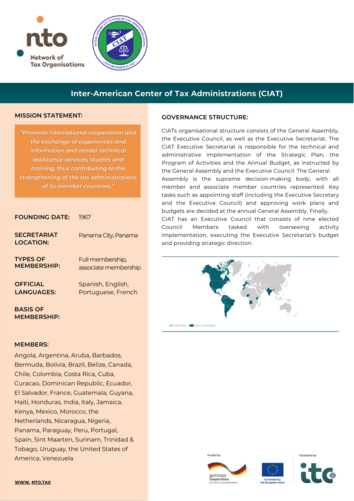
Inter-American Center of Tax Administrations (CIAT)

Download March 2024 The Inter-American Center of Tax Administrations (CIAT) is a member of the Network of Tax Organisations (NTO). To learn more about CIAT, have a look at the CIAT factsheet. Further information on all ten NTO members can be found in the NTO Practical Guide. The NTO Practical Guide aims to provide an overview of the functions of regional and international tax organisations, the nature of their institutional arrangements, as well as the activities they are performing and to draw some light on the recently created NTO. To access the full guide, please click here.

Inter-American Center of Tax Administrations (CIAT) Read More »

Exchange and Reflection Forum for Tax Administration Leaders (CREDAF)

Download March 2024 The Exchange and Reflection Forum for Tax Administration Leaders (Cercle de réflexion et d’echange des dirigeants des administrations fiscales) (CREDAF) is a member of the Network of Tax Organisations (NTO). To learn more about CREDAF, have a look at the CREDAF factsheet. Further information on all ten NTO members can be found in the NTO Practical Guide. The NTO Practical Guide aims to provide an overview of the functions of regional and international tax organisations, the nature of their institutional arrangements, as well as the activities they are performing and to draw some light on the recently created NTO. To access the full guide, please click here.

Exchange and Reflection Forum for Tax Administration Leaders (CREDAF) Read More »

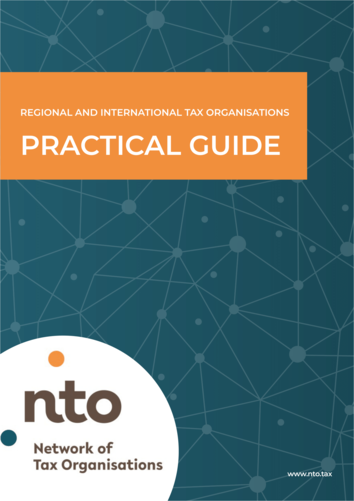
The Network of Tax Organisations – A Practical Guide

Download March 2024 Compiled by the NTO members, the NTO Practical Guide looks at regional and international collaboration in the field of tax administration. This publication aims to provide an overview of the functions of regional and international tax organisations, the nature of their institutional arrangements, as well as the activities they are performing and to draw some light on the recently created NTO. Overall, the NTO Practical Guide: Looks at regional and international collaboration in the area of tax administration against the backdrop of ever deeper global economic integration and international cooperation on taxation matters. Outlines the rationale of cross-border cooperation in the area of tax administration, the added value of tax organisations, and the objectives pursued by the creation of the NTO Provides an overview of NTO member organisations including, their organisational structure, membership, objectives, activities, and achievements, as well as their role in the international cooperation on tax matters.

The Network of Tax Organisations – A Practical Guide Read More »

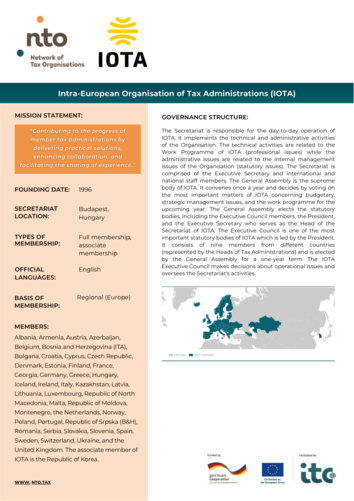
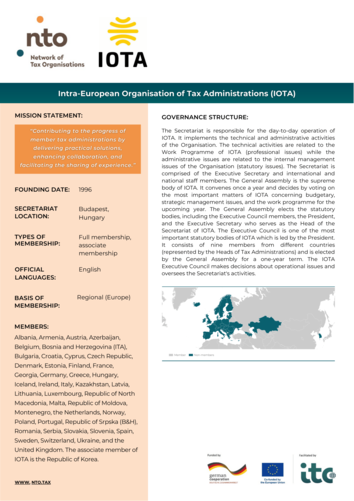
Intra-European Organisation of Tax Administrations (IOTA)

Download March 2024 The Intra-European Organisation of Tax Administrations (IOTA) is a member of the Network of Tax Organisations (NTO). To learn more about IOTA, have a look at the IOTA factsheet. Further information on all ten NTO members can be found in the NTO Practical Guide. The NTO Practical Guide aims to provide an overview of the functions of regional and international tax organisations, the nature of their institutional arrangements, as well as the activities they are performing and to draw some light on the recently created NTO. To access the full guide, please click here. Further information on all ten NTO members can be found in the NTO Practical Guide. The NTO Practical Guide aims to provide an overview of the functions of regional and international tax organisations, the nature of their institutional arrangements, as well as the activities they are performing and to draw some light on the recently created NTO. To access the full guide, please click here.

Intra-European Organisation of Tax Administrations (IOTA) Read More »

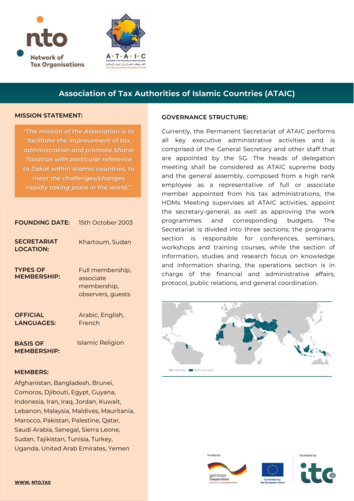
Association of Tax Authorities of Islamic Countries (ATAIC) Factsheet

Download March 2024 The Association of Tax Authorities of Islamic Countries (ATAIC) is a member of the Network of Tax Organisations (NTO). To learn more about ATAIC, have a look at the ATAIC factsheet. Further information on all ten NTO members can be found in the NTO Practical Guide. The NTO Practical Guide aims to provide an overview of the functions of regional and international tax organisations, the nature of their institutional arrangements, as well as the activities they are performing and to draw some light on the recently created NTO. To access the full guide, please click here.

Association of Tax Authorities of Islamic Countries (ATAIC) Factsheet Read More »

Translate »